



Crypto Vegas vs Crypto Wall Street
On‑chain ecosystems have long wrestled with a tradeoff between applications that generate large chunks of revenue and those that advance the mission of open access: on one side, a “crypto Las Vegas” of NFTs, memecoins, and incentive‑chasing recursive DeFi; on the other, a “crypto Wall Street” of useful but thin‑revenue, lightly adopted non and semi‑financial protocols that cannot support a $4‑trillion economy
The bridge is low‑risk DeFi that delivers global, permissionless access to payments and savings in mainstream assets with transparent, predictable returns.
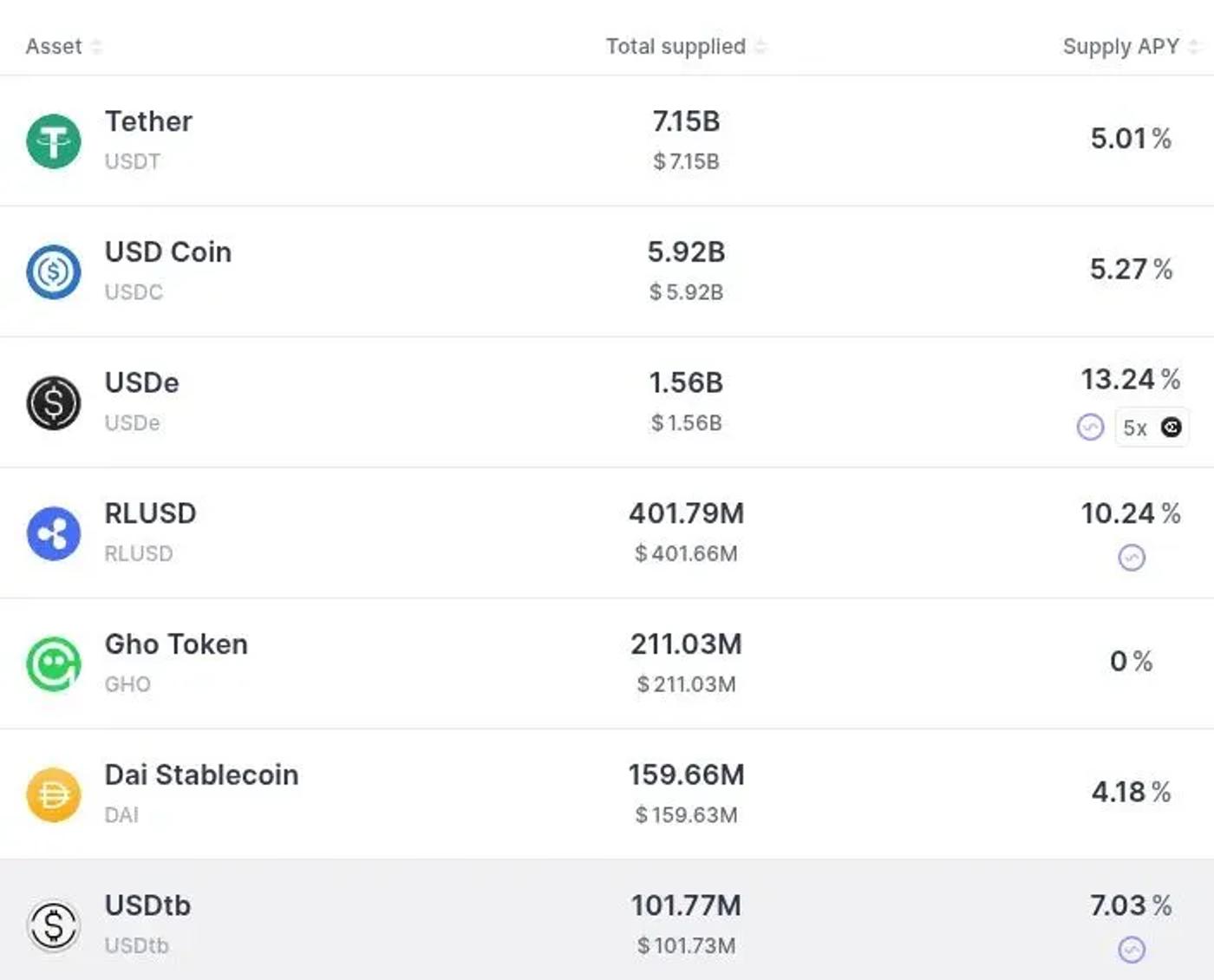
The analogy to Google is useful. Google does many things, but search and ads fund the rest. Across web3, low‑risk DeFi projects like SPICE can play that foundational role economically sustaining the ecosystem without warping its values. Unlike ads, it aligns “doing well” with “doing good,” because it expands safe, useful financial access for people and businesses underserved by traditional rails.
SPICE is building a critical piece of the stack that makes this stable, value‑aligned future practical: a decentralized underwriting engine for RWAs and a path to reputation‑based, undercollateralized capital for RWA Issuers. This is the infrastructure that turns “low‑risk DeFi” from a hope into a durable, compounding flywheel.
Why low‑risk DeFi now
- Protocol risk has come down: Early DeFi’s tail risks and incentive farming made sustainable use cases hard to justify. Over time, security improved, and risk moved to the speculative edges while a robust core stabilized.
- Regulatory barriers slowed useful adoption: As Gary Gensler and others shaped a climate where the more useless your application is, the safer you are, and the more transparently you act and the more clear guarantees you offer to investors, the more likely you are to be deemed “a security,” sustainable projects were persecuted [1].
- Real‑world demand is clear: We have spoken with nearly 100 RWA Operators across LATAM, North America, EMEA, and APAC, and the through‑line is consistent: they need predictable dollar rails, transparent rules, and faster time‑to‑capital without permission bottlenecks. Our near‑term focus includes tokenized contracts from essential commodities exports and structured credit, and market is ready [2].
- Mature DeFi users: Targeting allocators who need predictable, transparent yield with on‑chain collateral and execution that reduce counterparty risk and prevent redemption delays during defaults.
What SPICE adds: underwriting as a public good
Low‑risk DeFi won’t scale on tokenization and exchanges alone. It needs deep, credibly neutral underwriting. SPICE builds underwriting as public, on‑chain infrastructure so pricing and enforcement are objective, auditable, and free of discretionary gatekeeping. The result: safer, truly investable tokenized assets.
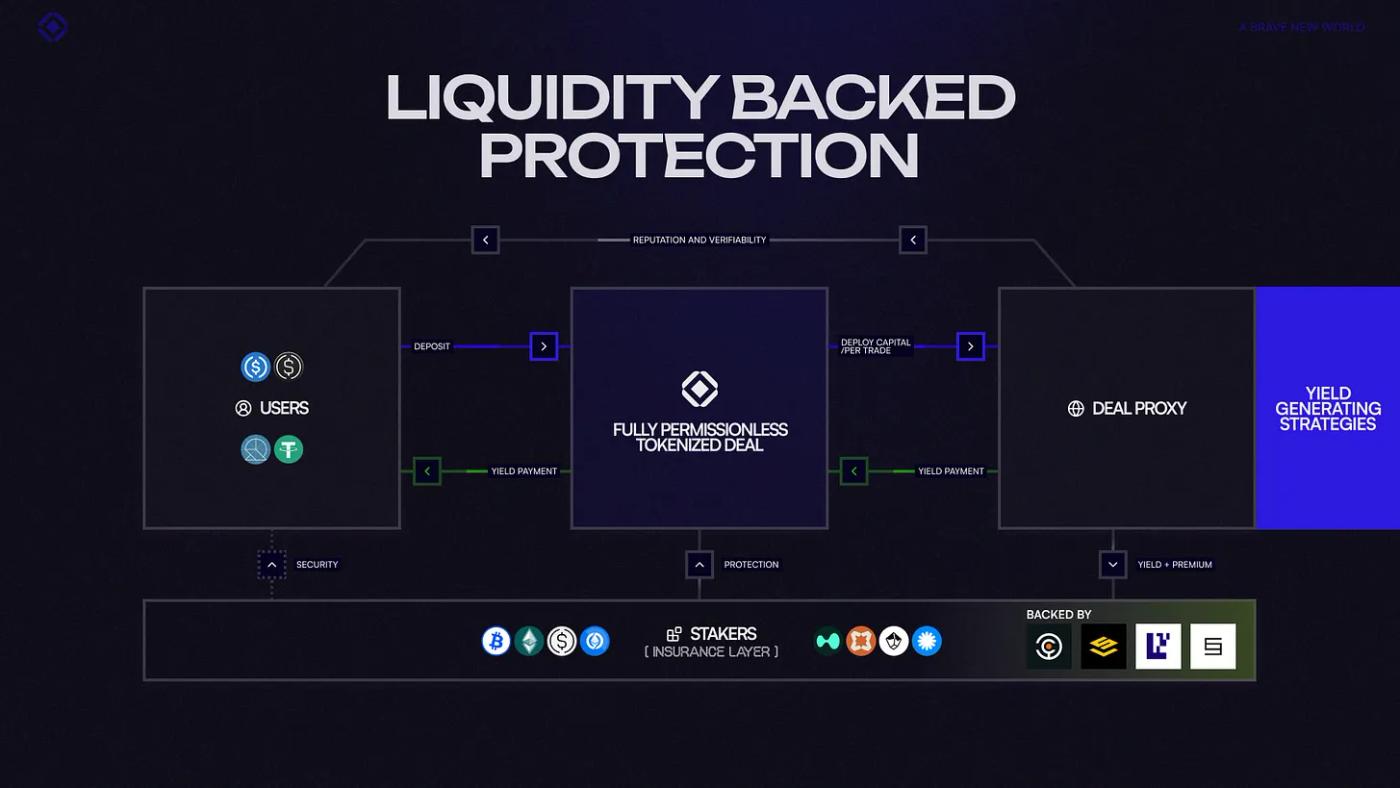
- On‑chain, objective underwriting with restaked capital pools: SPICE prices and enforces coverage on smart contracts and on‑chain data. Decisions are rules‑based and transparent, driven by liquidity signals and verifiable performance. In parallel, SPICE integrates with restaking protocols like Eigen and Symbiotic to source dedicated underwriting capital. Restakers earn a premium for securing insurance deals, with payouts tied to objective risk metrics and adherence to on‑chain service‑level guarantees. This expands underwriting capacity without compromising credible neutrality and aligns incentives across risk providers and deal performance.
- Lifecycle control through code: Deal creation, monitoring, and resolution are governed by contracts, not back‑office processes. This eliminates bespoke, deal‑by‑deal complexity and lets the system scale by focusing on outcomes rather than narrative or paperwork.
- Parametric and algorithmic design: Triggers are explicit and automated, comparable to a blend of parametric and algorithmic underwriting. Everyone can see how premiums are derived and when protections activate.
- Collateralized insurance with real skin in the game: Operators post on‑chain collateral that can be slashed on predefined failure or liquidation events. More staked collateral lowers premiums and improves investors’ effective yield, directly aligning operator behavior with capital costs.
- Reputation as a first‑class primitive: Underwriting is coupled with a portable, on‑chain reputation that compounds over time and affects cost of capital. Performance history, slashing, and disclosures crystallize into an “reputation asset” operators actually own.
Together, these elements make underwriting a shared, composable primitive built for breadth, repeatability, and ecosystem‑wide reuse.
Reputation‑based capital for RWA Operators [3]
Low‑risk DeFi’s safety came from full collateralization. Scale will come from calibrated, reputation‑priced relief granted only when performance is proven on‑chain and protections remain enforceable in code. SPICE connects these phases so operators can earn cheaper capital without re‑introducing opacity.
- Reputation that operators actually own: SPICE turns longitudinal performance into a portable, on‑chain asset that influences premiums and collateral requirements. Track records are composed of repayment behavior, covenant adherence, utilization, default and recovery stats, attestations, and audits.
- Programmatic guardrails first, relief second: Collateral and premium floors are enforced by contracts. Relief is incremental and revocable, keyed to time‑weighted results and standardized disclosures. If failure conditions hit, slashing executes no committees, no exceptions.
- Liquidity‑priced incentives: Operators who stake more and perform better see premiums compress and effective yields improve for their investors. Poor performance does the opposite. The system prices behavior, not branding.
- From one‑off deals to a commons: Because underwriting is standardized and on‑chain, strong operators graduate from over‑collateralized to reputation‑priced capital across multiple asset types. Weak operators are either priced out or improve to compete. The result is an underwriting commons where reputation compounds and the cost of capital falls as certainty rises.
This path preserves web3’s values of open access, verifiability, and credible neutrality while enabling undercollateralized credit that is earned, measurable, and continuously auditable.
The broader synergy unlocks
Low‑risk DeFi is a base layer for adjacent primitives that make the whole system more resilient and useful:
- Programmatic hedging: As prediction markets mature, originators and investors can hedge macro and idiosyncratic risks with transparent, on‑chain instruments reducing drawdowns without opaque derivatives desks.
- Beyond USD rails: Today’s demand centers on USD stability. Over time, basket currencies, CPI‑linked “flatcoins,” and other stability designs can diversify the system’s foundation without sacrificing safety.
- Identity and attestations: ZK‑enabled attestations and standardized disclosures make it possible to share what matters for underwriting while protecting sensitive details. This preserves privacy without re‑introducing black‑box decisions.
A flywheel that compounds trust and revenue
- Automated analysis and risk calculations on RWA operators
- Restakers confidently secure the insurance layer
- Liquidity deepens and premiums compress
- Borrower economics improve, attracting higher‑quality operators
- Rich on‑chain performance data reduces uncertainty and enables calibrated, reputation‑based relief
- Underwriting efficiency compounds and safe credit expands while tail risks stay bounded
- Transaction volume and fee generation sustainably fund the ecosystem
Each loop expands access while hardening guarantees. The result isn’t just “more TVL.” It’s a safer, cheaper, more legible credit rail that anyone can verify and build on.
What success looks like
- For investors: Stable, un‑sexy yield from transparent structures with explicit downside protections and real‑time monitoring. Less headline risk. Fewer surprises.
- For restakers: Premiums for securing underwriting deals, with payouts tied to objective on-chain risk metrics and service-level adherence. Transparent rewards for maintaining coverage integrity.
- For borrowers: A path from “prove it” to “earn it” to “price it” graduating from heavy over‑collateralization to reputation‑priced capital as performance accrues on‑chain.
- For the ecosystem: Fee‑generating, values‑aligned activity at L1 and L2 that doesn’t require compromising decentralization. A platform others can plug into rather than a monolith they must accept.
Low‑risk DeFi is already operating at meaningful scale and aligned with what web3 aspires to be. By combining automated operator risk analysis, collateralized insurance secured by restakers who earn transparent premiums, and reputation‑priced relief grounded in on‑chain performance, SPICE’s underwriting engine makes the rail safer, fairer, and much larger. The outcome is a credibly neutral credit substrate that sustainably funds the ecosystem with fees we’re proud to champion.
SPICE is raising now to accelerate protocol build out and looking to work with best‑in‑class partners across the ecosystem. DMs are open.
Glossary
- Low‑risk DeFi: On‑chain payments, savings, and fully collateralized or well‑hedged lending with transparent, predictable returns.
- RWA (Real‑World Assets): Off‑chain assets represented on‑chain, such as invoices, treasuries, commodities revenue, or credit portfolios.
- RWA Operators: Entities that originate, manage, and service RWA deals on‑chain, responsible for performance and disclosures.
- Risk assessment partner: An external provider integrated to automate operator analysis and deal‑level risk calculations used by SPICE underwriting.
- Underwriting engine (SPICE): Decentralized on‑chain system that prices, secures, and enforces risk using collateral, slashing, and transparent rules.
- Insurance layer: The coverage layer funded by collateral and secured by restakers that pays out on predefined failure conditions.
- Restakers: Capital providers who stake to the insurance layer to secure deals and earn premiums tied to objective on‑chain risk metrics and SLA adherence.
- Collateralized insurance: Deal‑level protection funded by posted collateral that is slashed automatically on predefined failure or liquidation events.
- Reputation‑priced relief: Calibrated reductions in collateral and premiums earned through verifiable, on‑chain performance histories.
- Reputation (operator): A portable, on‑chain performance record that influences pricing and required collateral over time.
- Slashing: Automatic loss of posted collateral when objective, on‑chain failure conditions are met.
- Effective yield: Investor yield after premiums and fees, reflecting the true net return.
- Credible neutrality: Objective, rules‑based operation that avoids discretionary gatekeeping and preserves ecosystem trust.
- TVL (Total Value Locked): Capital in protocols or deals, a size metric that is not risk‑adjusted.
- L1 / L2: Base settlement layers (L1) and scaling networks (L2) that inherit security via proofs.
- Prediction markets: Markets that trade outcomes of future events, enabling programmatic hedging.
- Flatcoin / basket currency: Stability designs pegged to indices (e.g., CPI) or diversified baskets rather than a single fiat currency.
- SPICE Vaults: Access vehicles for curated on‑chain exposure used in SPICE’s GTM phase.
- pUSD / pUSDnote: SPICE stable instruments referenced in campaign and redemption mechanics docs.
- OOP / LOP / UOP: SPICE GTM programs—Originator (Operator) Onboarding, Liquidity Outposts, and Underwriting Outposts.